Lily
Tinea and Leah: [Cyberpunk, Alien Incursions, Murder and Mayhem, Girl's Love (WLW)]Lily is Leah's younger sister and the absent center of Leah's emotional history. She dies from a tumor while the sisters are still children in an orphanage, but her memory does not remain confined to the past: Lily's death produces Leah's deepest guilt, while Lily's remembered personality and the care between the sisters become the foundation of Leah's later vocation as a protector of children.
Identity and Childhood
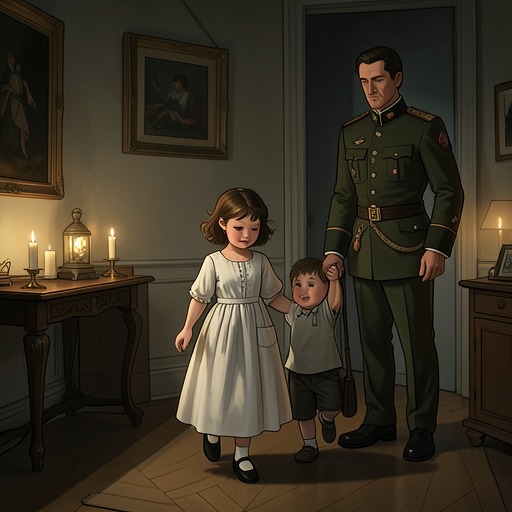
Lily grows up with Leah in an orphanage, where Leah acts as her big sister and protects her from bullies. The surviving image of their relationship is not merely one of biological kinship but of active guardianship: Leah remembers herself as someone responsible for keeping a sickly younger child safe. Lily is associated with distinctive personal details, including bright red hair and green eyes, as well as a temperament marked by curiosity and liveliness. These traits later allow Leah to recognize echoes of Lily in other children rather than remembering her as an abstract symbol of loss.
The sisters' childhood is preserved in a recording of Lily playing with Leah. The recording becomes an object of continuing emotional importance because it shows Leah's care directly, offering evidence that challenges the version of the past constructed by Leah's guilt. Instead of seeing only the sister she failed to save, Leah can also see the protection, affection, and ordinary happiness that existed between them.
Death and Leah's Guilt
Lily's death is sudden from Leah's perspective. Leah knows that Lily has been ill for some time, yet she does not understand how serious the condition has become until it is too late. The tumor takes Lily away while they are still young, and Leah interprets the event as a failure of her promise to protect her little sister. She believes she should have noticed the warning signs, that a better big sister would have recognized the danger, and that she might have saved Lily if she had seen the illness coming.
That belief damages Leah for years. She swallows her grief until an older man at the orphanage asks her to tell stories about Lily, permitting Leah to become angry, scream, and eventually cry after years of emotional suppression. He then asks about Lily's favorite color, the jokes that made her laugh, and the things she liked. By directing Leah toward Lily's personality and daily life, rather than only toward the circumstances of her death, he helps Leah recover a fuller memory of her sister and learn that grief can coexist with strength.
Leah later receives the recording of the sisters playing together. Watching it makes her grieve again, but it also reveals the beauty of the care she had given Lily. The recording therefore changes Lily's memory from an accusation into a source of pride. Leah begins to understand that her younger self could not simply be blamed for a disease whose necessary treatment would have cost more than the orphanage could pay, and that the tragedy was not proof that she had failed to love or protect Lily.
Afterlife in Caretaking
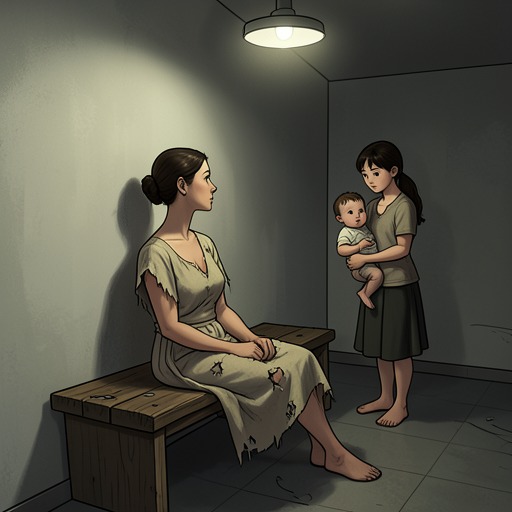
Lily's memory becomes the motive for Leah's long-term work with children. After recovering enough to certify as a caretaker at sixteen, Leah lives near several orphanages for eight years, regularly taking small groups of children on outings, teaching them life skills, and protecting their wellbeing. Her promise to Lily is transformed from a private vow about one irretrievable death into a continuing commitment to living children who still need a guardian.
Leah feels a particular attachment to a group that resembles Lily. One little girl has Lily's bright red hair and green eyes, while another girl and a boy share aspects of Lily's temperament and curiosity. The resemblance does not replace Lily; instead, it gives Leah a concrete setting in which to enact the promise Lily's death left unfinished. That promise reaches its greatest reward when Leah becomes a samurai while protecting the group and later shelters those children, along with others, during the New Montreal incursion. She ensures that they return safely to their orphanage before the kidnappers ambush her after she has entered her own home and lowered her guard.
Trauma and Continuing Influence
Lily's death remains an active psychological trigger rather than a resolved piece of biography. When Tinea realizes that her muffler has hurt Leah, Leah reacts with intense guilt because she had failed to notice Tinea's distress, just as she believes she failed to notice Lily's worsening illness. The resemblance reopens shame and grief that Leah had previously worked through. She becomes especially vigilant about hidden illnesses because Lily's sickness taught her to fear dangers that remain invisible until they are irreversible.
Leah explains that she spent years recovering from the shame surrounding Lily's death and experienced flashbacks until nearly sixteen. After becoming a capable caretaker, the episodes became limited to moments when she was alone and her subconscious interpreted the absence of support as danger. They eventually stopped for several years, but the extreme stress of the recent eleven days causes the trauma to break through again. During one episode, Tinea and Tynea identify the reaction as a flashback; Tinea is instructed to keep Leah safe, speak gently, and help orient her to the present without forcing additional physical contact. Leah later explains that an episode places an overwhelming load on her mind and requires patience while questions penetrate and answers emerge.
Lily's influence consequently shapes both Leah's strengths and her vulnerabilities. It produces the vigilance that helps her protect children, but it also makes unnoticed suffering feel like a moral catastrophe. Leah's recovery depends on learning that Tinea cannot become her entire support system and that professional care, alongside her own development as an independent person, must address the trauma. Lily is therefore present in the narrative not as a speaking character but as the history through which Leah learns the difference between responsibility, guilt, protection, and impossible control.
Narrative Significance
Lily gives Leah's identity as a caretaker its emotional origin and ethical direction. Leah's later protection of orphaned children is not presented as generic heroism: it is a deliberate answer to the loss of one particular child, remembered through hair, eyes, curiosity, laughter, and a shared recording. The story also refuses to reduce Lily's death to a simple lesson. Lily's absence remains painful, and the same memory that inspires Leah's courage can return as a flashback when another person's suffering goes unnoticed.
Lily's memory also complicates the book's treatment of bodies and transformation. Leah's own body changes dramatically, and she later confronts the loss and replacement of her limbs, yet Lily's story establishes that care is not measured by perfect control over another person's physical condition. Leah could love Lily, defend her, and still be unable to prevent the tumor from killing her. That distinction allows Lily to function as more than a tragic plot device: her death becomes the enduring measure against which Leah tests what protection can realistically mean, and her recorded childhood presence becomes proof that Leah's relationship with her sister contained tenderness as well as loss.